FOR IMMEDIATE RELEASE: June 11, 2026
MEDIA CONTACT: Annie Roge, Associate Director of Communications, Impact Justice | aroge@impactjustice.org
James Beard Media Award winners will be announced on Saturday, June 13th at Chicago awards ceremony.
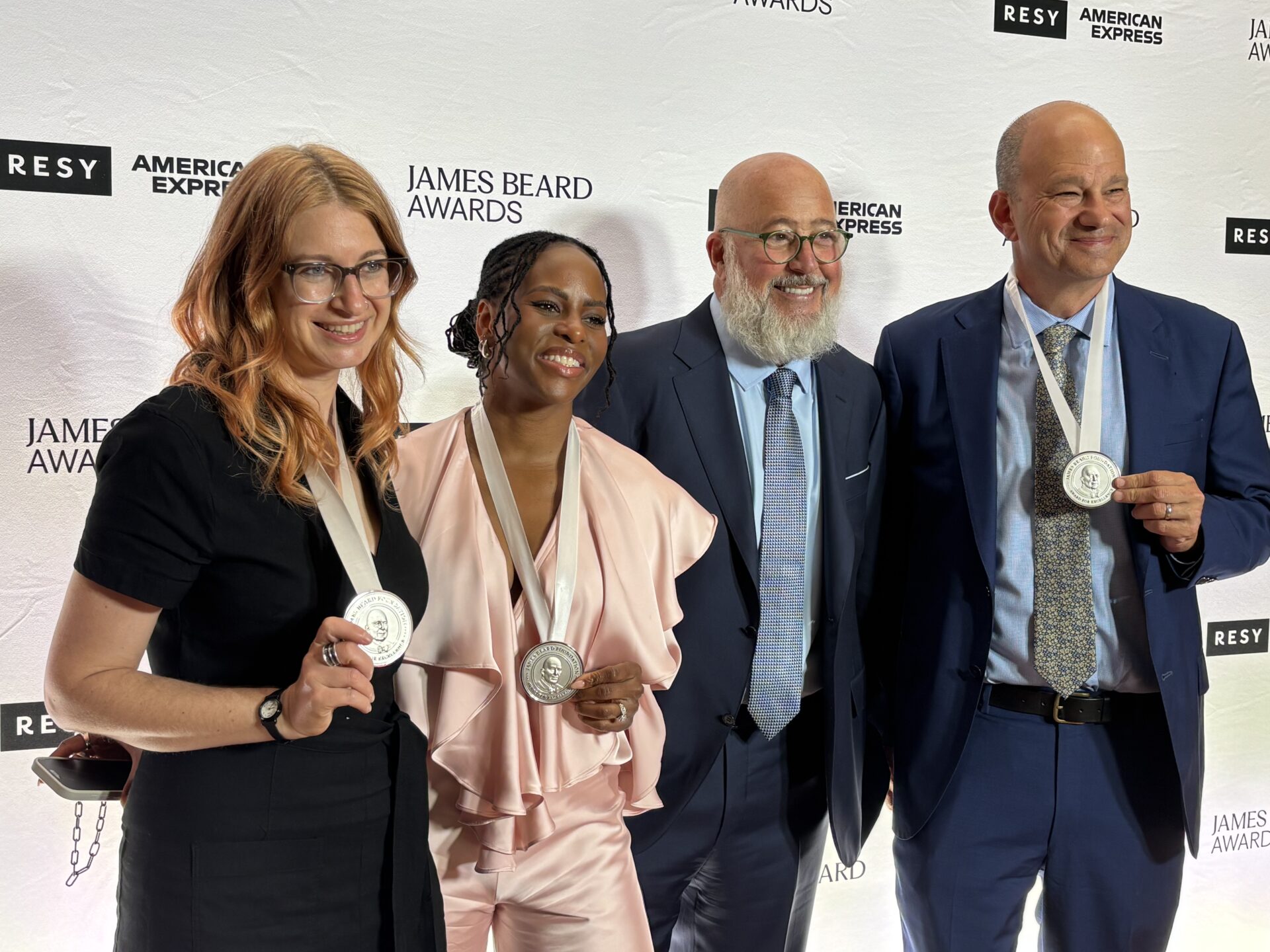
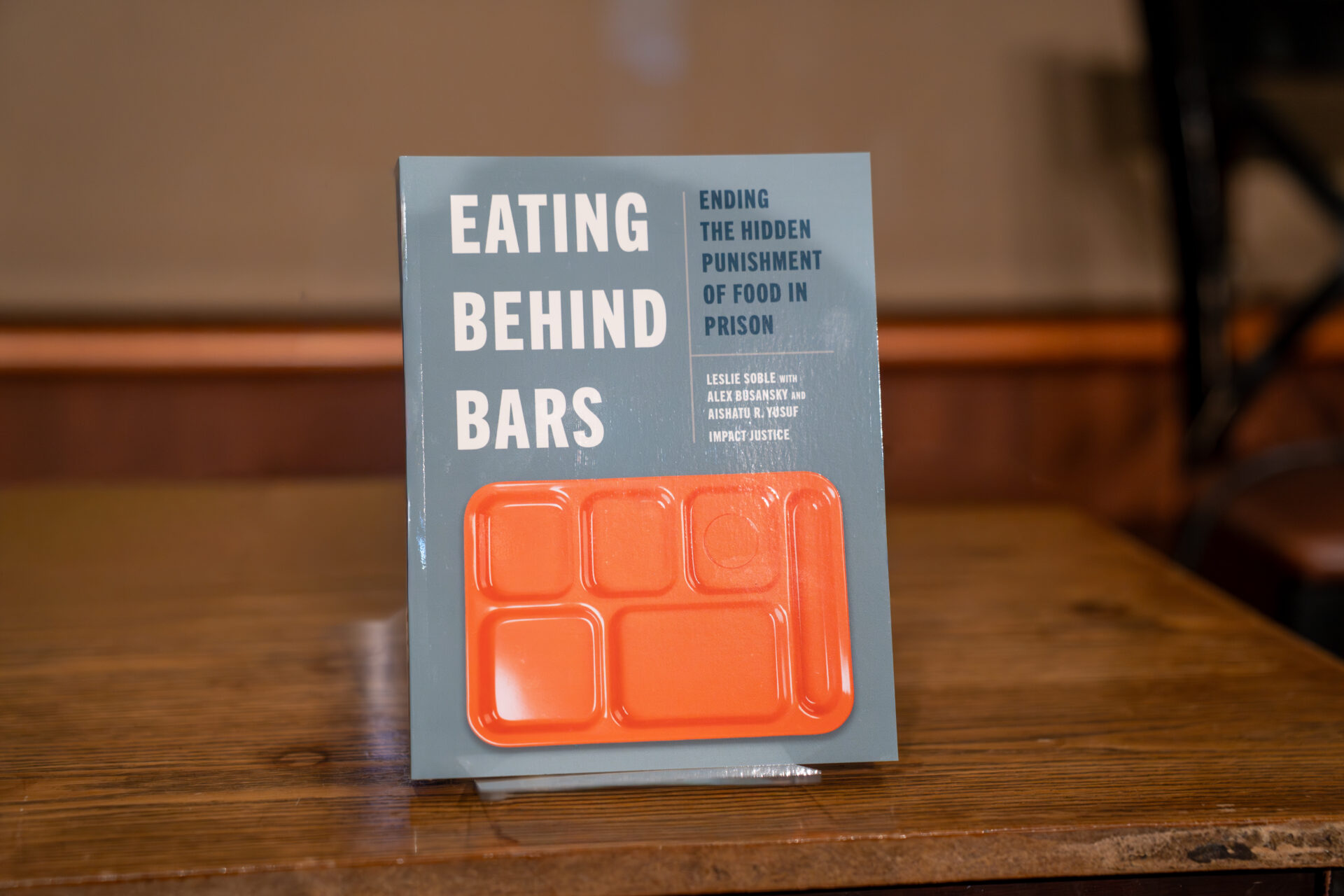
CHICAGO, IL — Eating Behind Bars: Ending the Hidden Punishment of Food in Prison, the recent book from national criminal justice nonprofit Impact Justice and public interest publisher The New Press, will be recognized as a nominee at the James Beard Media Awards in the Food Issues and Advocacy category on Saturday, June 13th.
Co-authored by Leslie Soble, Aishatu Yusuf, and Alex Busansky, Eating Behind Bars exposes a hidden food crisis affecting millions of Americans in our nation’s jails and prisons, where incarcerated people regularly face severe nutritional deprivation, hunger and malnourishment, and food that is often spoiled or otherwise unsafe to consume.
The mission of the James Beard Awards is to recognize exceptional talent and achievement in the culinary arts, hospitality, media, and broader food system.
“We’re grateful to the James Beard Foundation for recognizing this issue as a critically important piece of our national conversation about food,” says Alex Busansky, founder and president of Impact Justice. “Prison food doesn’t just impact people behind bars — it creates ripple effects that impact entire communities.”
The findings laid out in Eating Behind Bars are stark — more than half of formerly incarcerated people surveyed by Impact Justice rarely or never had access to fresh fruits or vegetables, and 75% reported being served food that was spoiled or otherwise inedible — including items in packaging labeled “Not for human consumption.” Each year spent in prison is estimated to shave two years off of a person’s life expectancy, in part because incarcerated people are fed a diet high in salt, sugar, and highly processed carbohydrates that for decades Americans have been told to avoid.
“Eating Behind Bars documents a crisis of extraordinary proportions — but it also demonstrates exactly how we can end it.” says Aishatu Yusuf, Vice President of Innovation Programs at Impact Justice. “We want people who read this book to understand that prison food is a fixable problem.”
The book spotlights a number of innovative programs proving that change is possible — including Impact Justice’s Harvest of the Month initiative, which has partnered with small and medium-sized farms across California to deliver more than 600,000 pounds of fresh, locally-grown produce to incarcerated people in the state since 2023.
“Food should never be used as punishment,” says Busansky. “We hope this book creates an opening for real change.”
Praise for Eating Behind Bars
“This eye-opening book will convince you that everyone — absolutely everyone — is deserving of nourishing food that affirms their humanity and dignity.”
—José Andrés, Chef and Humanitarian
“Eating Behind Bars chronicles a movement in the early stages of making important changes in people’s lives.”
—Civil Eats
“A heavy mix of harrowing and hopeful. . . . Readers interested in food justice shouldn’t miss this.”
—Publishers Weekly
“In a nation obsessed with food and health, Eating Behind Bars asks us to consider what it’s like to have no choice in what you eat and be dependent on foods known to be unhealthy. This portal to a world out of sight also suggests how to create a common table big enough for all of us.”
—Mark Bittman, award-winning food journalist and author of How to Cook Everything
“Leslie Soble dares to expose the truth I once lived: that in prison, food is punishment. Eating Behind Bars documents the cruelty baked into every tray and the workings of a system that starves body and soul, robbing people of their humanity. This alone would be worthy of our attention, but the book goes further to show how farm-to-tray programs and other common-sense reforms are nothing short of acts of liberation.”
—Susan Burton, Author and Founder of A New Way of Life
“Prison can be a setting for rehabilitation or a factory for producing more crime. Almost everyone behind bars now will someday return to society. Brutalizing them only leads to more brutality. As this excellent book demonstrates, feeding incarcerated people well, showing concern for their physical and mental health, teaching them how to farm and cook and prepare food can make a real difference. Free or unfree, we are what we eat.”
—Eric Schlosser, Journalist and Author of the bestselling book, Fast Food Nation
“It’s harder to ignore a problem when you understand it. Documenting the experience of eating behind bars shows how the food that’s made and eaten every day by two million people who depend on it is far from okay. This knowledge is the beginning of a better path forward.”
—Dan Giusti, Chef and Founder/CEO of Brigaid
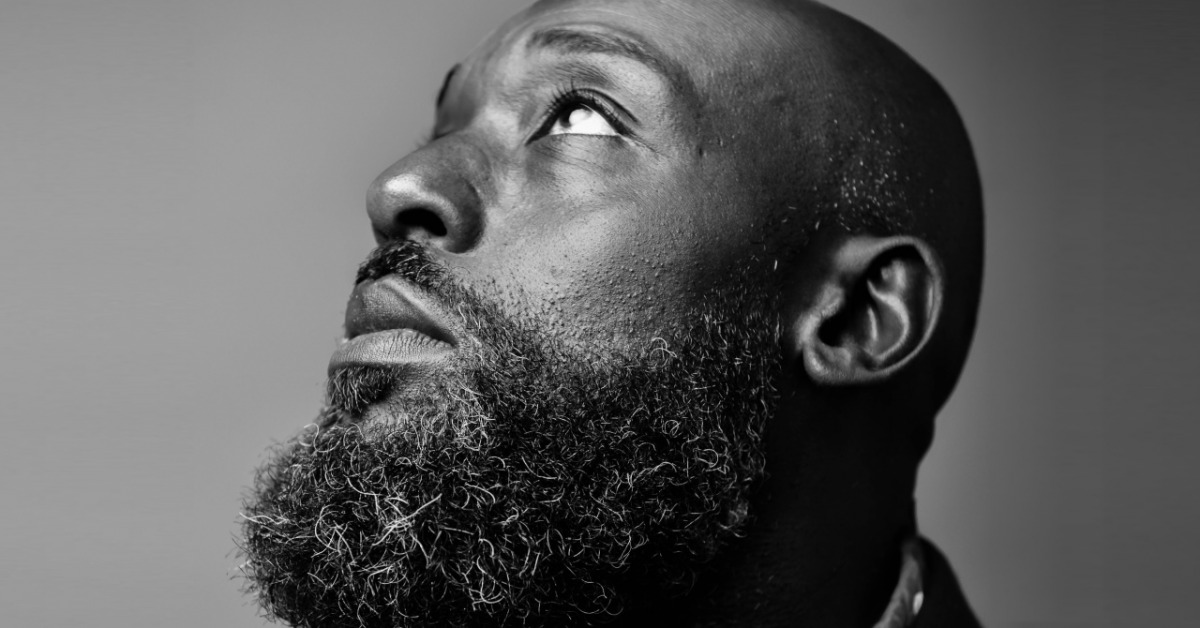
“This is no lie: I had my first mango when I was nineteen years old and in solitary confinement at Sussex 1 State Prison. I didn’t even know what the fragrant, delicious fruit was until five years later, when I was home. For those five years, I would sometimes think of that mango, like everyone else inside, craving fresh vegetables, fruit—a real meal. Eating Behind Bars isn’t just about how bad things are. It’s about how good things should be and how we might get there—and it’s a reminder that in a just world, that mango wouldn’t have felt like a miracle. It would’ve been expected.”
—Reginald Dwayne Betts, poet, lawyer, MacArthur Fellow, and executive director of Freedom Reads
##
About Impact Justice
Impact Justice is a national research and innovation center that works beyond the traditional boundaries of criminal justice reform to design and scale solutions that promote safety, justice, and opportunity.
About The New Press
The New Press amplifies progressive voices for a more inclusive, just, and equitable world. As a nonprofit public-interest publisher, we leverage books and outreach to facilitate social change, enrich public discourse, and defend democratic values.