Think about the last meal that meant something to you. Maybe it was cooked by someone you love. Maybe it marked a celebration, or offered comfort after a hard day. Food is one of the most fundamental ways we affirm our humanity — and the humanity of those around us.
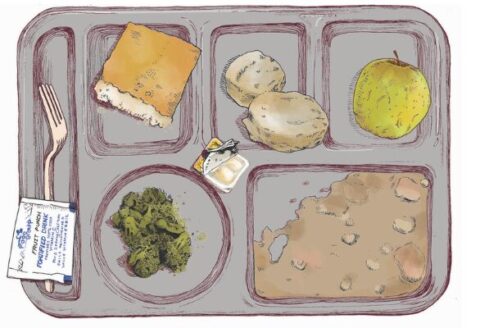
Now imagine that every single day, your only option is a tray of food that turns your stomach. At best, food that you know is unhealthy: canned, boxed, high in sodium and sugar. At worst, food that smells wrong. Bread that is moldy. Meat with an expiration date years in the past. Food stamped “Not for human consumption.”
This isn’t a hypothetical. This is the daily reality for nearly two million people incarcerated in America’s jails and prisons.
“The food there was designed to slowly break your body and mind.”
- Formerly incarcerated interviewee
Roughly 1 in 2 Americans has had an incarcerated loved one — and ninety-five percent of incarcerated people are eventually released. They return to neighborhoods, families, and communities carrying the cumulative damage of years of nutritional deprivation — the true costs of prison food.
Mapping America’s hidden food deserts
This weekend, the James Beard Foundation — the most prestigious name in American food culture — celebrated Eating Behind Bars: Ending the Hidden Punishment of Food in Prison with a Media Award in its Food Issues and Advocacy category.
This recognition signals that the food world is finally starting to recognize that food in prison is not a niche issue. The food justice movement — which has fought for urban farms, school lunch reform, and equitable food access — cannot be complete without addressing what’s on meal trays behind bars.
The numbers tell a stark story. More than half of formerly incarcerated people surveyed by Impact Justice reported rarely or never having access to fresh fruits or vegetables while in prison. Three out of four reported being served food that was spoiled or otherwise inedible. Ninety-four percent said they didn’t have enough food to feel full.
Across the board, a drive to cut spending — even as food costs have risen — has come at the expense of human decency. In some states, facilities spend less per day on breakfast, lunch, and dinner for an incarcerated person than the cost of a single school lunch. The result is a diet that is carbohydrate-heavy, ultra-processed, and nearly devoid of the fresh produce that every health professional agrees is essential to wellbeing.
The health consequences of a poor diet compound over time. Research shows that just one month of inadequate nutrition can trigger long-term rises in cholesterol and body fat. A person sentenced to state prison serves three years on average — roughly 3,000 meals. Each year spent in prison is estimated to shave two years off a person’s life expectancy, in part because incarcerated people cannot rely on food to prevent or manage disease.
It’s time to end the hidden punishment of food in prison.
One of the most important things Eating Behind Bars makes plain is this: food in prison is a fixable problem.
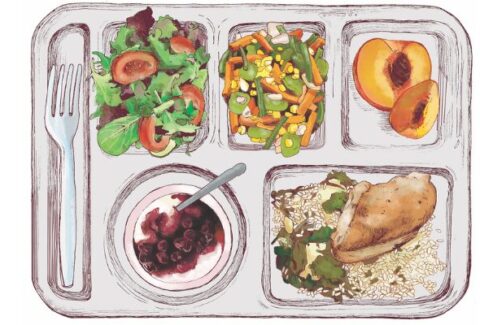
Impact Justice’s Harvest of the Month initiative is one of the clearest proof points. In partnership with the Nutrition Policy Institute, the California Department of Corrections and Rehabilitation, and Spork Food Hub, the program sources fresh, locally grown produce from small and mid-sized California farms and delivers it directly to incarcerated people across the state, simultaneously increasing nutrition access for incarcerated people and expanding purchasing pathways for small growers. Since 2023, more than 600,000 pounds of fresh fruits and vegetables — 17 varieties, from 130 farms — have reached approximately 90,000 people across 30 prisons.
“EATING BEHIND BARS DOCUMENTS A CRISIS OF EXTRAORDINARY PROPORTIONS — BUT IT ALSO DEMONSTRATES EXACTLY HOW WE CAN END IT.”
– Aishatu Yusuf, Vice President of Innovation Programs, Impact Justice
That impact is measurable, but it also contains something harder to quantify — like the first fresh apricot someone has tasted in decades. It’s about more than nutrition — it’s about being reminded that you are a human being who deserves real food.
Other programs profiled in the book — like Growing Justice, which is establishing vertical farms on prison grounds, and Chefs in Prison, a model for transforming correctional food service through culinary training — demonstrate a slew of other promising models primed for national scale.
The James Beard Award for Eating Behind Bars is more than an honor for a book. It’s a signal from the food world that this issue belongs in the mainstream conversation — alongside every other fight for food equity and access.
Now, we’re asking you to join in.
Read the book. Share what you learn. Demand better standards for the people locked in America’s hidden spaces. Direct needed resources to the organizations and projects tackling this issue.
And know that when we fix this, we’re not just fixing a prison problem — we’re building a food system worthy of everyone.